Friday, June 28, 2013

A Poem for My Daughter
by Anthony Abbott

Our God our help in ages past
Our hope for years to come.
Our shelter from the stormy blast
And our eternal home.

                                                  Isaac Watts

1.

How young we were then, my darling, how little
we knew, you and I, when you slipped into
that final sleep so quietly—no time
for words, no words we knew to say.

At the service we sang Isaac Watts.
I mouthed the rhymes dry eyed as always.
I wore a suit and stood up straight. You
followed me everywhere, down the yellow
brick road, Dorothy to my Tin Woodsman.
I wanted a heart. I feared tears would turn
me to rust. You slept in the field of poppies
your breath in my ear. You were the lamb
in the basket grown leggy and wild.
You followed me to school, I saw you
in the eyes of the girls. I fell, down, down
the hill. You tumbled after, laughing.

2.

Suddenly you’re forty-five. Oh my dear,
how you would love it here now. Women
at forty-five just coming into the sweet
beauty of their primes. Not like the days
when they were old at thirty. God, you would
dazzle them now, the way you’d walk into
a room all smiles and wisdom like the grey
heron standing in the pond, wings furled,
ready to take off. Beauty is always
almost gone, says Hopkins.. Maybe so.
You left with yours intact and brought it back
transformed. I didn’t know that until you
came to me with everything God taught you
all those years—a thousand ages like
an evening gone—and here you are to teach
me what I need to know.

3.

Muse, angel, companion of these later
years, now I know that, bidden or unbidden,
you were with me all along, even when
I thought you had surely gone, like sun
at four o’clock on winter afternoons.
I know your guises now—the eye
of the stranger in the street, asking why,
the woman with the green shawl looking
back over her shoulder. And yes, I see
you, too, in the blue waters of the lake
and the small purple flowers that grow wild
on the bank in the rocks among the day lilies.

I stop here now and wait for your touch.

How did you come to write “A Poem for My Daughter”?

My daughter died when she was just short of her fourth birthday in 1967. I began writing poems for her in the 1970s. I wrote “The Girl in the Yellow Raincoat” to celebrate her college years. In a previous posting on this blog (see Tuesday, November 6, 2012), “The Man Who Speaks to His Daughter on Her 40th Birthday” was part of a series of poems I have written—in 5 year intervals—celebrating her life as it might have been. This one above, “A Poem for My Daughter,” marks her 45th birthday in 2008, and I have already written one to celebrate her 50th this year, and it is out for publication right now.


Anthony Abbott


How did writing this poem affect your recovery?

This poem and the others I have written in her memory have kept her alive in my imagination, which is critically important to me. Recovery is in part the result of turning something painful into something that heals. The writing of these poems has been a central part of the healing process.

Can you tell us something about your process of writing that helped this poem come to life?

I think I have already alluded to the process of consciously celebrating her life in poetry every five years. So I being to think quite consciously of what she might have been like at 40, 45, or 50. That conscious imagining is central to the whole process of creating the poems, but the poems also must come in and of themselves. I can’t know everything in advance or there is no surprise. No surprise no emotions. So the whole last scene in the poem is pure imagination, pure surprise, pure joy of having her appear.

Who are your favorite poets or poets new to you whom you’d recommend to others?

Poets I have worked with in recent years who have meant a great deal to me include Jane Kenyon (absolutely essential), James Wright, Maxine Kumin, Sharon Olds, Mary Oliver, William Carlos Williams, and Walt Whitman.

What are you working on now? I published two books in 2011—If Words Could Save Us, a book of poems with accompanying CD, and an anthology I edited, What Writers Do, which celebrates the writers who have been part of the Lenoir Rhyne University Visiting Writers Series. I am very busy teaching and doing readings from these two books this year.


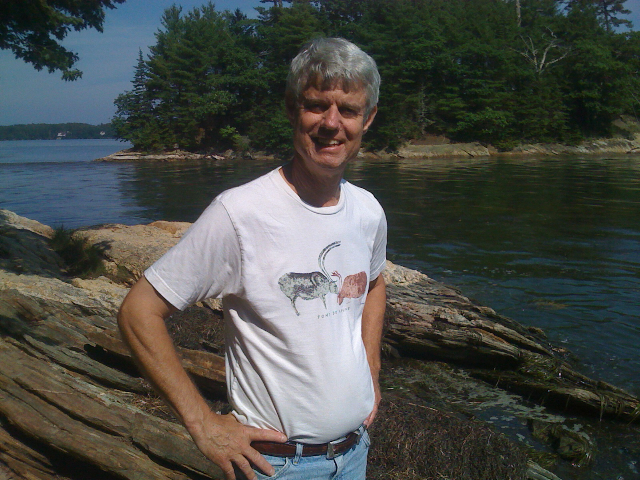
Anthony S. Abbott is Professor Emeritus of English at Davidson College. He is the author of two novels, including the Novellow Award winning Leaving Maggie Hope. He has written six volumes of poetry, the most recent of which is If Words Could Save Us (Lorimer Press, 2011). He is the 2012 winner of the Rose Post Creative Nonfiction Award of the North Carolina Writers Network.

Tuesday, May 28, 2013

Poet Barbara G.S. Hagerty
Reading May 30
At Piccolo Spoleto

On Thursday, May 30, poet Barbara G. S. Hagerty will be reading at the Piccolo Spoleto Sundown Poetry Series at 6:30 PM in the Dock Street Theatre Courtyard, located at 135 Church St., Charleston, SC. It’s free and open to the public. A reception and book signing for Barbara will follow at the Martin Gallery, 18 Broad St.

Bassist Anthony del Porto, of the bluegrass band Southern Flavor, will accompany her reading.

Barbara’s reading is but one of 10 that will go on during the festival as part of the Piccolo Spoleto Sundown Poetry series. All readings at 6:30 PM in the Dock Street Theater address above. Find out more about the festival readings, now through June 7, at Piccolo Spoleto. Poccolo Spoleto.

Barbara’s poem “Visiting Virginia P.” appeared in After Shocks: The Poetry of Recovery for Life-Shattering Events, an anthology of 152 poems by 115 poets from 15 nations. The poem is reprinted below, followed by an interview with Barbara.

Visiting Virginia P.

By Barbara G.S. Hagerty

We grow hollyhocks, paint glistening tomatoes,
watch how light fractures a glass of water,
look up words in the middle of the night.
Our bones and narrows rearranged,
we gave birth seven times between us.
Once we followed Berryman,
we were blond disciples
of his cauliflower syntax, his gothic architecture
and small houses, the ruined porch,
the bridge, the truss, the ice,
the freefall into madness.
Nothing could save us
from the gravitational pull of alcohol
until we washed up at AA
among the molded plastic orange chairs,
meetings, coffee, smoke—those were the days
when chain smoking was encouraged
as an antidote to worse things—
among the old timers who spoke in slogans
One Day at a Time, First Things First, Easy Does It.
I thought I’d landed on a planet full of ashtrays
run by an editorial committee of the Reader’s Digest.
Today you recalled I once said Pray
for the unknown help that’s already on its way
.
Now I meet your son, for the first time, he’s 18, grown well
and sturdy, like someone whose boughs we could climb into.

Interview With Barbara G.S. Hagerty

How did you come to write “Visiting Virginia P.”?

Chronological time is somewhat collapsed in “Visiting Virginia P.” Although I'd attended various 12-step meetings with Virginia in the late 70's and early 80's, and kept in touch with her after I had moved away, I did not meet her son until he was 18. In those intervening years, Virginia and I had, via both effort and grace, grown generally happier, healthier, and wiser--and had both become mothers. When I met her son, he struck me as whole and wholesome, traits attributable at least in part to healthy mothering. Tall, strong, towering over both of us, he brought to mind the qualities of a tree: sturdy, substantial, grounded in the earth, rooted in the real world. So the triggering event and the original experience it alludes to are separated in time by more than 25 years. Which is one of the bewitching things about poetry: all memory and all experience are available to the poet, always and in abundance.


Barbara G.S. Hagerty

How did writing this poem affect your recovery?

It didn't directly, as it was written so many years after the process of recovery began. But I would like to answer the question more broadly, to say that the act of writing is, for me, always salubrious in some way, always revelatory. I think of the pen as an epistemological tool, akin to an archeologist's probe or chisel. Writing helps excavate the layers and uncover the hidden strata, to see ways--often extraordinarily unexpected-- in which absolutely everything is interconnected. And, you know how the sages say you can't step in the same river twice? Similarly, no two days of excavating are ever alike--the finds are always different, even when you are probing similar territory.

Can you tell us something about your process of writing that helped this poem come to life?

My poetry-making mind is omnivorous; that's the case, I think, with most poets. A phrase, a sound, a mood, an image, a sensory impression, a conundrum, a curiosity--almost anything can get me started. In this instance, the experience of meeting the young man elicited a flood of associations and memories. That John Berryman would appear in the poem just seemed organic and natural. Again, I marvel that imagery like "planet full of ashtrays," which must have been incubating somewhere in my mind for a long time, just seemed to emerge from the shadows when the poem demanded to be written.

Who are your favorite poets or poets new to you whom you'd recommend to others?

Rhett Iseman Trull (The Real Warnings); Allen Peterson (All the Lavish in Common); Sandra Beasley (I Was the Jukebox); and Lisa Fay Coultey (In the Carnival of Breathing) are four poets I admire whose work is fairly new to me. I also admire the poetry of Gilbert Allen, Paul Guest, Lucia Perillo, D. Nurkse, Spencer Reece, Dan Albergotti, Susan Meyers, and Carol Ann Davis, among many others. The work of Larry Levis is important to me, and I recently read the remarkable Letters to a Stranger by Thomas James (who died in 1974 at the age of 27). Not to mention Li-Young Lee, Pablo Neruda, Yehuda Amichai, and Czeslaw Milosz....so many favorites! Recent prose works on poetry that I have read include Close Calls with Nonsense (Stephen Burt) and Real Sofistikashun: Essays on Poetry and Craft (Tony Hoagland). Finally, the one prose work I would take with me to that proverbial desert island is A Joseph Campbell Companion (edited by poet Diane Osbon). Essential!

What are you working on now?

I have just completed a new manuscript entitled Twinzilla; as the title suggests, it explores the duality of the self. I am tuning this manuscript up at the moment, as well as working on other individual poems in various stages of dishabille.

Barbara G.S. Hagerty is author of The Guest House and Motherfish (both from Finishing Line Press, in 2009 and 2012, respectively). She was awarded the Fellowship in Poetry from the South Carolina Arts Commission in 2010. She was also awarded a fellowship at the Virginia Center for the Creative Arts. Her work, both poetry and prose, has appeared widely. She lives in her native Charleston, SC, where she co-coordinates The Piccolo Spoleto Sundown Poetry Series (with Susan Meyers) and serves on the board of The Poetry Society of South Carolina. She has also worked as a magazine writer, journalist, photographer, curator, and teacher of poetry and creative non-fiction. She holds an MA in Creative Writing from The Johns Hopkins University's Writing Seminars.

Saturday, May 25, 2013

"Last Surviving Hymn to Hathor"
by Nehassaiu deGannes

Who leads us, moon-drunk, into clover
and sweeps the starch rectangle of the blank half
of the bed? You love him? You love him not?
Lolling on the dark howl’s tambourine.
Honey, can’t find true love ‘cuz yuh too afraid to die.
The train is in the cattle yard again,
clattering up and down the lonely tracks.

Gourd of lullabies and rich dark earth,
what makes us cough, plump the pillow, rise
to take a piss, catch the distance lowing in our ears—
Is that Ella all glissando?
What floods our hearts with thunder?
The train is in the cattle yard again, clattering
up and down the lonely tracks.

Look how her tail’s a metronome. Her eyes are bells
of iron. Those daddy-long-leg lashes flint and there are sparks
of hammered iron flying ‘bout the room. She’s crying
Why, when a man gets too close with a bunch of cow-slip
orchids growing from his fist, you cock your head, go very still—
wonder what he plans on doing with his other fist?

You’re hiding in the cattle yard again.

Pull a ream of paper from the white shelf of sleep
“blankness + me = possibility unchained;”
and drown the tinkling cowbells in the toilet’s oceanic hiss.
But our conductor drop kicks her orchestra again.
She’s lounging on your moon-white pillow.
Fool, love won’t find you. Can’t find you.
Her bassoon now quaking all the orchids in the room.

Why not lay your head down on her chamois lap?
She’s scattering an entire confluence for you
of what is done and gone and lost for good
Life’s a dung-hill and you plant your seeds in thati
of what’s to come is yours and can be yours to trust
Not in punishment but in sanctified pleasure. Cross over.
Cross over.
The train is in the cattle yard again.


Interview With Nehassaiu deGannes

How did you come to write The Last Surviving Hymn to Hathor?

“Last Surviving Hymn To Hathor” began as a failed sonnet. I became enthralled with the notion of writing little songs devoted to human failure, and while the sonnet form did not prove conducive to this particular meditation on failed love or the failure to love, the blues motif did. In the same way that traditional blues weave together the sacred and profane, this poem wanted to inhabit both the mythic and mundane. Here an earthy mythic voice whispers in the ear of a woman who tells herself she has awakened simply because she needs to take a piss. Nothing else. She’s ‘content’ and in control inside her protective shell of distrust and ambivalence, a shell that is a hard-earned armor, the result of childhood and adult sexual traumas. Yet something is gnawing at her. Tickling at her. Crooning in her ear. The truth that to truly survive we must relearn how to be vulnerable, to cross the tracks from victim to wholeness with all the risks that that entails, to trust, to break, to sing ourselves into wholeness---all of this was in the poem’s first seed, it’s first impulse, but it took several revisions to find it’s form and its meditation.


How did writing this poem affect your recovery?

I remember reading, while I was still an undergraduate, Alice Walkers’ IN SEARCH OF OUR MOTHERS’ GARDENS, in which she speaks of writing the books she needs to read. My poem is indeed a poem I need to read. I am both the distrusting ambivalent woman and the fairy-godmother-goddess-cow (as in Hathor/ as in the cow that jumped over the moon). I am the one in need of the message and the one in which the message resides. Writing this poem helped me give voice to a slowly-dawning realization that to stay on this side of the hard-bitten tracks wasn’t going to be enough.

Can you tell us something about your process of writing that helped this poem come to life?

I rewrite and rewrite and rewrite, often allowing weeks and months between revisions. I listen and listen and listen, for as one of my first teachers, Sonia Sanchez, told me, “Listen to the poem. Always listen to the poem. It will tell you what it needs.” With this poem, I may also have employed a strategy that Rita Dove shared at a Cave Canem summer retreat: “Tear the poem in half length-wise. That will often reveal the dross.”

Who are your favorite poets or poets new to you whom you’d recommend to others?

Right now, four of my favorite poets are Tracy K. Smith, Aracelis Girmay, Natasha Tretheway and Ross Gay. Some of my perennial favorites include Gerard Manley Hopkins, Kamau Brathwaite, Aimé Cesaire, and Lorna Goodison.

What are you working on now?

I am an actress and writer and am currently making my debut at the Stratford International Shakespeare Festival in Canada, playing "Lady Capulet" in Romeo & Juliet, directed by Tim Carroll of the UK's Old Globe and Factory Theatres, and "Anne of Austria, Queen of France" in The Three Musketeers, directed by Miles Potter. I will also be appearing in The Merchant of Venice, directed by Festival Artistic Director, Antoni Cimolino. It will be a robust eight months.

Of the many projects I've collaborated on this past year, last Spring I played Diana Sands, opposite Broadway veteran actor and choreographer Hope Clarke, in a two-person play about Ms Sands' life and art. Diana was a brilliant African American actress, activist and pioneer, who passed away in 1973 at the age of 39, thus for many of us her work is little known or forgotten. She originated leading roles in Broadway productions of Hansberry's and Baldwin's plays, played Shaw’s “St. Joan” at Lincoln Center and was the first in a color-blind lead on Broadway, starring in THE OWL AND THE PUSSYCAT opposite Alan Alda, as well as many many other stage and film credits.

Whether acting or writing, my work lays claim to several cross-cultural literary and theatrical legacies: British, American, Caribbean and Canadian, classical and contemporary. I constantly claim the right to play roles both written for and those not written expressly for black women, and fortunately I have had several opportunities to do just that. Thus, learning about Ms Sands and embodying her legacy was a profound experience.
Nehassaiu deGannes is a theatre artist & poet. Winner of the 2011 Center For Book Arts Letterpress Chapbook Award, the 2010 Inaugural Cave Canem Fellowship to the Vermont Studio Center, and several grants and awards to develop her one-woman show, Door of No Return, excerpts of which are featured in The Museum on Site’s book A Thousand Ships: A Ritual of Rembrance. Her poetry has appeared in Callaloo, Poem Memoir Story, American Poetry Review, Caribbean Writer, Painted Bride Quarterly, Tuesday: An Art Project, TORCH, Encyclopedia Project, After Shocks: The Poetry of Recovery Anthology, The ARAVA Review and the Cave Canem Anthology XII. Recent acting credits include: "Kate" in Good People (Hampton Theatre); “Cordelia” in King Lear with Frankie Faison and Andre Braugher (Luna Stage); “Carmen” to Amy Irving’s “Madame Irma” (Red Bull Theatre); “The Nurse,” in Tony Walton’s production of EQUUS opposite Alec Baldwin (Guild Hall); the world premiere of The Tallest Building In The World (Luna Stage); “Betty,” A Song For My Father by David Budbill (Oldcastle Theatre), poet & mover in the national tour of Rigidigidim De Bamba De: Ruptured Calypso with Cynthia Oliver’s COCo Dance Theatre; and “Roberta Charles,” Room For Cream (Theatre of The Two-Headed Calf & LaMAMA ETC). Nehassaiu holds an MFA from Brown University and is a graduate of Trinity Rep Conservatory. She has taught poetry at The Rhode Island School of Design and Brown University, and was a part-time Assistant Professor of Theatre at Rhode Island College (2007-12). Visit her web site at Nehassaiu's web site.

Wednesday, May 8, 2013

After Shocks Poet John McAllister
Tells Why He Wrote The Station Sergeant
His New Detective Novel Set in Ireland

Irish poet and novelist John McAllister has just released his 2nd novel, The Station Sergeant (Portnoy Publishing, Dublin). His essay on why he wrote this murder mystery follows a brief synopsis of the book.

The Station Sergeant, set in the late 1950s and early 1960s in turbulent Ballymena, Northern Ireland, concerns the discovery of the body of a local farmer. Station Sergeant John Barlow’s investigation hits up against local hoodlums who steal cattle to order, an escaped WWII German soldier, and a new boss who hates Barlow.

Meanwhile, Barlow’s violent schizophrenic wife, his teenage daughter’s waywardness, and his affair with another woman distract him, but will tantalize readers. The Station Sergeant evokes the turbulence of the post-WWII period in Ireland and represents the best elements of classic crime writing. Available now at Amazon.com at The Station Sergreant.

WHY I WROTE THE STATION SERGEANT

By John McAllister

Way back at the start of the “Troubles”, the police in Belfast were being overwhelmed by the scale of the rioting. To help out, officers were shipped in from the country areas. Of course the city police made fun of their “country cousins”, none more so than of a slow moving, slow talking, slow thinking constable from way out in the bogs.

This “country cousin” said nothing: didn’t retaliate, didn’t show annoyance, but when the time came for him to go back to his country station he stopped at the door and looked back.

He said, ‘I mightn’t know much about police procedurals or all this modern policing stuff they teach you boys now. And I might spend more time herding cows off the road than chasing robbers, but I would know if someone had set up a poteen still in the house next to the police station.’

It worked the other way too. A young constable from a police patrol stopped to talk to a farmer. A cockerel jumped onto the wall beside them.
‘That’s a fighting cock,’ said the young constable.
‘It is not,’ said the farmer.
‘I tell you it is.’
‘And what would you, a city man, know about fighting cocks?’
My father kept them,’ said the young constable and walked on with the patrol.


                    John McAllister

The John Barlow in my book is such a man. He was modelled on a real-life policeman of the same name. In my youth story after story about the “doings” of Barlow were whispered around my home town of Ballymena. He was sly, he was cute, he was sleekit. He had a reputation for being stupid and, according to rumour, he blackmailed the District Inspector to get staying on in Ballymena when the man wanted him posted.

Barlow joined the RIC and stayed on after partition when it became the RUC. He apparently served in Ballymena for forty-five years. Mention him to one of my brothers-in-law and his blood pressure shoots up. Yet an old friend, Harry McLarnon, says, ‘John Barlow, now there was a great man'.

I was at Trinity College Dublin reading for my masters in Creative Writing. I always wrote on the train going to and coming from Dublin, but one night I was really tired and didn’t feel up to it. Rather than surrender entirely to my tiredness I promised myself “ten minutes and then I’ll stop”. I put the pad in front of me with absolutely no idea what I wanted to write about. Something about one of the “Barlow” stories of my youth popped into my head and I wrote it down. Ten minutes and a page of recollections later I had the basis for five stories. Five stories populated by real people from my youth.

Edward Adair “gentleman and drunk by profession” really did exist in the form of two people. Ballymena always seemed to have a tramp who was well known and popular with the townspeople. One of them, like Edward, really did live under a dry arch near Curles Bridge. When he went into hospital the hospital management had to beg people to stop clogging up the phone lines wanting to hear how he was doing and did he need anything. The local papers undertook to publish a weekly update on the tramp’s progress.

The second person that Edward is based on was a pleasant, very well spoken man who lived in digs near my home. He was a cousin of the then prime minister of Northern Ireland and related to the lords O’Neill. When he died suddenly at an early age he was found to have done complex mathematical calculations on the margins of newspapers. We’d all thought him a bit “soft”. In those days none of us had ever heard the expression “idiot savant”.

Ballymena also had a notorious family: utterly polite when sober, demons when drunk and occasionally more sinned against than sinning. Their antics as I grew up gave me the idea for a local family of – shall we say – chancers.

My mother’s mother was a Dunlop. The Dunlops were and are big farmers, leading lights in the local Orange Lodge, town mayors and extremely nice people. Out of sheer devilment I used their name and the ner-do-well Geordie Dunlop and his family were born.

The setting for the stories was easy. I just took Ballymena as I remember it in the fifties and sixties, relocated the real Curles Bridge to the Penny Bridge area and Adair Castle to the site of the new municipal cemetery. River Road really exists under another name but I put two bends in the adjoining river that you will never find on an ordinance map.

The five “Barlow” stories were published in my short story collection, The Fly Pool. Even now, ten years on, people still contact me to talk about the collection and always, always, always they want to talk about Barlow and the things he got up to.
One friend, who shapes a cross with his fingers to ward off evil if I even mention the RUC, kept nagging at me for another Barlow story. Way back I had started a sixth story but abandoned it for various reasons. I went back to that story and somehow a novel grew out of it. A very minor theme in the original version suddenly gripped me and The Station Sergeant as it now stands was born.

I kept John Barlow’s real name in my stories and book, to celebrate and keep alive the memory of a man who strode Ballymena like a goliath in his day. In real life, John Barlow was a mere constable but have I accorded him the long delayed accolade of Station Sergeant.

John McAllister was an Accountant in Practice and a Tax Consultant for forty-five years. He has now retired to become a fulltime writer. He read for an M. Phil. in Creative Writing at the Oscar Wilde Centre, Trinity College, Dublin. His poems have been published in Europe, Australia and in the USA. His poem “Dog Days” appeared in After Shocks: The Poetry of Recovery for Life-Shattering Events. His collection of short stories, The Fly Pool, was published in 2003 by Black Mountain Press. He is currently working on a second collection. His first novel, Line of Flight, is available for Kindle. His latest novel, The Station Sergeant, from Portnoy Publishing is now available on Amazon.com for Kindle, click here to order The Station Sergeant by John McAllister.

Sunday, May 5, 2013

"Dog Days" by John McAllister
A Poem on Loss of Innocence


Dog Days

It was a row, a humdinger.
In the end the young bride damned
her marriage to hell, called the dog
and caught the train home to mother.

Which row it was she never said.
But she was always shifting furniture
so perhaps it was the time he got home from work
and went from bath to bedroom in the dark.

He gave her a few days, until it was plain
her temper would last as long as her red hair,
before he appeared at the door.
He said, I’ve come for the dog.


Interview with John McAllister


How did you come to write “Dog Days”?

I was never able to write a poem about my mother during her lifetime. Granny Sarah featured in several poems, and her strong character has inhabited some of my stories and books. But mother no.

Soon after mother’s death I went to a weeklong literary event in Killybegs, County Donegal. On the final morning mother’s stories of her early married life coalesced into “Dog Days” which was more or less written in one sitting.

I had just shown the poem to friends, Joan and Kate Newmann of Summer Palace Press, when I got a phone call to say that our family pet, a pug, had been knocked down and killed.

How did writing “Dog Days” affect your recovery?

My mother was quietly religious. She never preached but led by example and she felt that life, with all its ups and downs, should be celebrated. She was left a widow in her mid thirties with three children, all of whom had serious health problems. Instead of wrapping us in cotton wool she opened the door and told us to get out there and enjoy ourselves. She herself played bowls (doubles with an international champion) until months before her death. Writing the poem and remembering mother’s laughs as she recounted the different elements in it made me remember how she brought laughter to her own deathbed. When the Marie Curie nurse appeared she knew that the end was close. Instead of being tearful she introduced us as “This is my three children, but I have lovely grandchildren.”

Can you tell us something about your process of writing that helped this poem come to life?

The only way prose or poetry can come to life is if you are involved in life itself. My best writing is where I am tapping a memory from childhood or dealing with something I regard as a miscarriage of justice. Sometimes I take a real-life character and twist. In my published novel Line of Flight the main character is based on a real SAS soldier BUT in the book he is so useless at defending himself that he has to get his baby brother to fight his battles.

Who are your favorite poets or poets new to you whom you'd recommend to others?

Recommending favourite poets is like sending someone into a library to pick a novel. They’d be lucky if they find one they really like. It’s the same with poets, but I’ll mention three whom I know well both personally and through their work. Professor Nigel McLoughlin, University of Gloucestershire, England. In appearance and voice Nigel sounds like an all-American footballer, but he writes with great delicacy. Paul Maddern is originally from Bermuda and has recently taken up a lectureship in creative writing in England. Right from the first day we met at the Seamus Heaney Centre at Queen’s University, Belfast, I knew that Paul had a special gift. Jean O’Brien has won several international awards for her poetry. In spite of the fact that she has a low opinion of men generally, she still regards me as a friend.

What are you working on now?

I have one novel with a publisher which should be issued this year. The Priests’ House is about an Irish Catholic priest turning up at his new parish with his girlfriend. I have just published a novel about Ireland of the 1960s which is currently available NOW for Kindle at Amazon.com from Portnoy Publishing. The Station Sergeant is about an ageing policeman who likes being grumpy and hates being caught out in kindnesses. A mad gunman is killing people seemingly at random. Eventually the sergeant has to make some hard decisions before he can bring the killer to justice.

Having got that lot out of the way for a time I hope to get back to writing some poetry.

John McAllister was an Accountant in Practice and a Tax Consultant for forty-five years. He has now retired to become a fulltime writer. He read for an M. Phil. in Creative Writing at the Oscar Wilde Centre, Trinity College, Dublin. His poems have been published in Europe, Australia and in the USA. His collection of short stories, The Fly Pool, was published in 2003 by Black Mountain Press. He is currently working on a second collection. His first novel, Line of Flight, is available on Kindle. His latest novel, The Station Sergeant, from Portnoy Publishing is now available on Amazon.com for Kindle, click here to order The Station Sergeant by John McAllister.

Wednesday, April 24, 2013

After Shocks Poet Nancy Tupper Ling
Seeks Submissions for Anthology of Toasts

Nancy Tupper Ling is seeking submissions of poems that would serve as toasts, graces, and blessings for an anthology that she is co-editing with June Cotner.

The main purpose of TOASTS: The Essential Collection of More Than 500 Toasts, Graces, and Blessings is to offer inspiration and confidence to those who will be giving toasts. Readers should be able to find toasts that will be appropriate and enjoyable for every occasion, from anniversaries to funerals to all holidays to weddings. The list is very broad.

The editors’ desire is to find new and creative toasts that will appeal to a broad range of readers, including those in their 20s and 30s. TOASTS will be the primary book consulted when a toast is expected at an event.

The categories will include the following: Adventures, Anniversaries, Art and Inspiration, Award Presentations, Babies, Best Wishes, Birthdays, Bon Voyage Parties, Business Events, Charity, Children, Christenings, Class Reunions, Creativity and Imagination, Family, Family Reunions, Fortune & Prosperity, Friends, General Blessings, General Celebrations, General Toasts, Good Luck, Graces, Graduations, Gratitude/Joy, Guests, Happiness, Health, Homecoming, Host & Hostess, Housewarming, Love & Romance, Memorial/Funeral Gatherings, New Job, Patriotic Toasts, Pets, Retirement, Roasts, Weddings, Wisdom. Plus holiday toasts, including: New Year’s, Valentine’s Day, St. Patrick’s Day, April Fools’ Day, Passover, Easter, Mother’s Day, Memorial Day, Father’s Day, Fourth of July, Labor Day, Halloween, Thanksgiving, Chanukah, Christmas, and Kwanzaa.

Submissions must be emailed or mailed no later than April 30, 2013, following these guidelines:

Please email no more than three submissions, each as a separate Word document and all inside one email message. If your submissions are exactly what we’re seeking, you will be invited to submit more.

All submissions must be double-spaced in Times New Roman 12 with all of your contact info single-spaced on the upper left corner.

Use TOASTS as your subject line followed by your last name.

Submissions should be anywhere from 2-6 lines and easy to say out loud. Submit only those selections that can be spoken easily in a group setting. “Graces” and “Blessings” should also be short. All Graces and Blessings should be interfaith. The editors encourage the submission of humorous toasts, too!

Email submissions to submit@finelinepoets.com.

If submitting via postal service, you will receive a response if you enclose an SASE along with your submissions. Please mail submissions to Fine Line Poets, Executive Center #247, 1600 Boston Providence Highway, Walpole, MA 02081.

TOASTS: The Essential Collection of More Than 500 Toasts, Graces, and Blessings will be published by Viva Editions. They publish “Books for Vivacious Living!” and they were founded four years ago by Brenda Knight at a pivotal point in time, as the stock market plummeted, the economy softened, and businesses tightened and cut back. Viva focuses on expansion, courage, and joy in life. In short, Viva is about the very best in the human spirit. Please visit them at Viva Editions .

Payment is one copy of the book for each published selection for non-exclusive rights. You retain all rights.

For full information on submissions, feel free to visit Toasts Anthology.

Nancy Tupper Ling is the winner of the prestigious Writer's Digest Grand Prize and the Pat Parnell Poetry Award.

She draws her inspiration from the multicultural background of her family and the interwoven fabric of familial culture which is, on the surface, seemingly everyday. She is the author of My Sister, Alicia May (Pleasant Street Press) and the founder of Fine Line Poets. Currently she resides in Walpole, Massachusetts with her husband, Vincent, and their two girls.

Wednesday, April 17, 2013

“Another New England Winter”
by Nancy Tupper Ling

By February we’re weary.
Four o’clock’s darkness
descends again over
our sterile snow drifts,
trapping us behind doors,
drawn curtains that keep
drafts and neighbors at bay.
Even diehard Yankees wonder
if spring will come.

We’ve faced such dormancy
before: five years waiting
for a tiny life to flower
inside my womb. Then, too,
we shut shades early
against sounds, voices
of nearby children
sledding into our gully,
alone with Mourning.

Come March we notice
first buds unfurling.
We crack our windows,
let in light breezes.
They carry pollen,
fresh and sticky
to our sills.


Reprinted by permission of the poet from her chapbook Coming Unfrozen (Blue Light Press, 2010). The poem also appeared in the anthology After Shocks: The Poetry of Recovery for Life-Shattering Events


Interview With Nancy Tupper Ling


How did you come to write “Another New England Winter”?

I wrote this poem in winter, a New England winter, when we tend to retreat into our homes, away from our neighbors. I remember listening to the voices of children sledding into the next door gully and that brought me back to a time of great sadness in my life, waiting for years to have our first child. When I wrote, I was emerging out of the darkness of infertility. I felt the renewed hope that comes with spring.

How did writing this poem affect your recovery?

I was on the other side, having emerged from the longing and loneliness of infertility. At last we had our long-awaited child, but it was bittersweet. I didn’t want to forget where I’d come from, or lose the empathy I had for others suffering the same heartache.

Can you tell us something about your process of writing that helped this poem come to life?

More than any other time in my life, words overflowed onto the pages of my journal. Looking back, I know these poems weren’t my best work, but they were a healing work. During this time of crisis and afterwards, I began to submit my poems to the world. One of the hardest things about any life-shattering event is the lack of control. The very process of writing and submitting my work took my mind off of the things I couldn’t control, and brought joy back into my life. Eventually, I collected my published poems into a book called Laughter in My Tent, hoping to reach other couples who battled with the same emotions.

Who are your favorite poets or poets new to you whom you'd recommend to others?

I love so many of the poets in After Shocks. Recently, I discovered Michael Miller’s book, Darkening the Grass, published by CavanKerry Press. What a work of beauty by a man in his eighth decade of life. It gives me hope! Also, being totally biased, I will mention some of my fellow Fine Line Poets: J. Lorraine Brown, JoAnne Preiser, Fran Witham, Marcia Szymanski, Virginia Bradley, and my mom, Jean Tupper. Do I sound like someone receiving her Oscar?

What are you working on now?

So nice of you to ask! I’ve been concentrating on my picture book manuscripts. Also, I am co-authoring a book called Toasts: The Essential Collection of More Than 500 Toasts, Graces, and Blessings with June Cotner. It’s being published by Viva Editions and submissions are welcome to Toasts Anthology.

Nancy Tupper Ling is the winner of the prestigious Writer's Digest Grand Prize and the Pat Parnell Poetry Award. She draws her inspiration from the multicultural background of her family and the interwoven fabric of familial culture which is, on the surface, seemingly everyday. She is the author of My Sister, Alicia May (Pleasant Street Press) and the founder of Fine Line Poets. Currently she resides in Walpole, Massachusetts with her husband, Vincent, and their two girls.

Tuesday, April 2, 2013

"This New Never" by J. Stephen Rhodes
A Poem After Loss of Child


This New Never

This new never is quiet enough to fill a hundred caves
with monks. The wind rushes up from our pasture,
bends the pines and brings no news. I whisper
your name and look at your picture on the desk,
the one where you smile like the Little Flower
of Lisieux, willing your pain into someone else’s joy,
if only you could decode the mysterious how.

You’ve been gone two months in this new forever
where I can’t call you Sunday afternoons
to talk about your last college course, on silence,
a subject we both longed to comprehend and
entered in awkward minutes when we didn’t know
what to say from the desert inside, each of us
craving the sound of wind across the mouths of caves.

Some days I swear not to eat. Then you make me break
my vow. You say, in my head, don’t be stupid, and I want
to retort, the way you were, but don’t because you hurt
enough, your eyes tired of looking for I’ll-never-know
what but perhaps a visit with one of your obscure poets
who helped you think yourself to that beach in Mexico
where you sat alone with the black dog watching the surf.

I look for any ever or always where you might be hiding,
your little girl self leaning out from behind the black oak
in our front yard, you in your pink and yellow dress
playing peekaboo with me. I listen to the sky. In the quiet
you speak: I’m not there, buddy. No dice. But I’m OK.


"This New Never" reprinted with permission of the poet from his collection The Time I Didn’t Know What to Do Next (Wind Publications, 2008). Also published in the anthology After Shocks: The Poetry of Recovery for Life Shattering Events

Interview With J. Stephen Rhodes

How did you come to write “This New Never”?

I wrote it in the year after my 21-year-old daughter’s suicide. I was trying to make some sort of sense out it for myself--how to move on.


How did writing this poem affect your recovery?

I believe this poem, like many others I wrote at the time, helped me to express my grief and thus to not be dominated by it. It also helped me recover my appreciation for my daughter’s beauty and goodness. And it also helped me turn my grief into something that conveyed beauty—at least to me.

Can you tell us something about your process of writing that helped this poem come to life?

I directed this poem to my daughter—it’s a “you” poem, and that sense of address gave birth to its language and images. It allowed for “singing” (a lyric) I might not have discovered otherwise.

Who are your favorite poets or poets new to you whom you'd recommend to others?

I’ve been quite taken recently with two Irish poets, Paula Meehan and Michael Longley, both of know something of recovering from life’s wounds and who know how to sing without being obscure or cute. Robert Cording, Suzanne Cleary, and Mark Jarman have come to mean quite a lot to me. Robert Frost and Elizabeth Bishop remain guiding lights.

What are you working on now?

I’m having a lot of fun working on a poetic bestiary in collaboration with the gifted artist, Amanda Chao. Animals figure prominently in a lot of my poems. I’m also trying to figure out how to write “religious” poetry (since I’m a religious person), and also poems that speak to the environmental crisis and the wider problems it engenders. Stephen Dunn’s warnings on the inherent dangers of such writing challenge me, but I still feel “called” to try.


J. Stephen Rhodes writes about living on the edges between security and fear, guilt and grace, as well as between country and city, and prosperity and scarcity.

His poems have appeared in a number of literary journals, including Shenandoah, International Poetry Review, The Texas Review, The William and Mary Review, and Tar River Poetry. His poetry collection, The Time I Didn’t Know What to Do Next (Wind Publications, 2008), won enthusiastic reviews from Suzanne Cleary (Trick Pear), Fred Marchant (Full Moon Boat), and Leatha Kendrick (Heart Cake). His essays have appeared in The Gettysburg Review, Brevity, and Sojourn, among others. He has won a number of literary awards including a fellowship from the Hambidge Center for the Arts and Sciences (2007) and Second Place in the Bright Hill Press Book Contest (2006). He was selected to read for the Kentucky Great Writers Series in 2010. He has written professionally since 1987. He lives in Berea.

Regarding his poems and essays, he comments, “I want to write in a way that offers hope for people like myself who are more than a little overwhelmed by modern life. I want to be honest about the brokenness that besets us, but I am also looking for beauty in the midst of that brokenness.” For example, in his essay “Dark Glasses in Church” (Gettysburg Review), he describes making the transition from being a married, plane-hopping administrator to being a divorced, small-town pastor: “I felt like I was spinning inside a washing machine while looking through a sudsy window at my wife, children, vocation, and the rest of the world.” Or in his poem, “What was Taken,” he reflects on leaving the world of security for the world of anxiety after being the victim of a break-in:

    Tonight it’s hard to sleep
    because the door still swings open in my mind
    letting in strange fingers I might have seen
    today putting coins in a parking meter
    or shaking out cigarettes while I walked
    by and waved as I often do

Steve Rhodes grew up in Atlanta in the 1950’s and 1960’s in a white-painted brick house on a quiet street in a moderately well-to-do neighborhood. “Before 1960, I thought of my family as a ‘Leave It To Beaver’ kind of family. The 1960’s yanked me all over the place: warehouse work, a gruesome private school, bad acne, ditch-digging, a mother who drank too much, being kicked out of Boy Scouts, “God is dead,” Campus Crusade for Christ, VISTA, working with developmentally challenged children, and service as a conscientious objector working in a hospital during the Viet Nam War.”

The subsequent three and a half decades have only served to widen this exposure to different worlds: pastoral work at a inner-city church and two small town churches, the deep south, Appalachia and Central America, stints as a seminary dean and as the director of a non-profit organization.

In addition to a Ph.D. in Theological Studies from Emory University, Rhodes received his M. Div. from Columbia Theological Seminary, his B.A. from Eckerd College, and his M.F.A. in creative writing from the University of Southern Maine-Stonecoast.

Thursday, March 21, 2013

Poet Recovers With Wanderlust
Tour in Its Third Year


Paul Allen has been a poet nearly all his life, and he's taught poetry at the College of Charleston for 36 years. He’s published two collections, American Crawl and Ground Forces, and has appeared in numerous journals and anthologies, including After Shocks: The Poetry of Recovery for Life-Shattering Events.

Two years ago, he retired from teaching, and he planned a whopper of a recovery. He sold all of his belongings and hit the road in a 20-foot Toy Hauler camper. He's been traveling cross-country for the last two years doing readings and playing his guitar wherever he could. Then, after a short visit to Charleston a few weeks ago, he hit the road again.

Follow along with him at www.poems-songs.com.

During his visit to Charleston, he gave an interview to the Charleston City Paper, and here are a few excerpts:

On his decision to hit the road:

I've always wanted to move, to explore — books, ideas, and places. So being divorced, kids grown, and my retirement coming up, and living in an apartment, I figured this was as good a time as any to explore. I gave up my apartment, gave my furniture to my children, my books and CDs of a lifetime to my students, and jumped.


Poet Paul Allen in his camper/trailer on the road,
somewhere in the U.S.

On how his travels have affected his writing:

The poems I'm working on now for a collection has the working title of Recalculating: New Poems from the Road. I'm discovering that the places I travel — and this is one big country with a lot of elbow room — the sense of being in states where I do not know a single person who lives there, and the sense of being alone staring into my campfires have combined to make these poems more intimate in tone, in some respects quieter.

Now, with no agenda and the rest of my life to accomplish it, I can take more time with my work, exploring the ideas over weeks and months. I don't have to think about building a career. I just finished a long poem that I worked on every day for four months, over 200 pages of notes and drafts and exploring philosophy, history, and religion — I can be a lot more patient with the poem that is trying to surface, now, and with myself in the composition process. And since I go for a week at a time without meeting a soul or talking to anybody, I find my poems more introspective now.

Strangely enough, the quiet life exploring wherever I land, has made me even more aware of spiritual kinship with strangers and with the land.

Memorable moments from the road:

Spending time alone at the mass grave at Wounded Knee, Pine Ridge Indian Reservation, and a month in the Black Hills of South Dakota, sacred ground to the Sioux, and the spirits of the place allowed me to feel their presence. Mark Twain's boyhood home in Hannibal, Mo. and being in the room where Jesse James was assassinated, and watching the annual Buffalo round up — 1,400 wild bison coming over the hill at full run — that was spectacular.

On going back on the road after his recent stop in Charleston:

I'm hoping I'll want to spend March in Alabama, and I hope I'll want to go toward Montana in April through the summer. But I really have no agenda, plans, or goals. On my way to Montana, I might pick up a brochure that makes me decide to stay in Nebraska awhile. Could be I never get to Montana. Heck, I might decide to park my camper somewhere permanently. Whether it's a street in Clovis, N.M., where Buddy Holly recorded, or a bus stop in New Orleans, the Sonora Desert, an abandoned mining town, or an art museum in Nashville, it's all teaching me something I didn't know. And if you can't find something new to learn in your own yard, you're not likely to find it anywhere else.

Read the entire Interview from The Charleston City Paper Interview with Paul Allen.

A new poem by Paul Allen, written on the road:

Best Guess

1. Hell Hound on My Trail
                 Robert Johnson

My friend’s teen daughter is being sucked down
into a hole so deep and dark a grown up would turn
to fits of madness, madness to roil or wreck
all sense of balance, proportion;
where the house, the car,
the sliced thumb instead of an onion,
the taxes, the way our coat hangs
on the railing of the ship,
the broken finger, the faucet leak
or lack of tape for a late night
Christmas wrapping, and the deaths
become all equal, equally shameful, equally
victimizing, muddied and toxic.
The kid’s not but 19, for God’s sake!

I want to send her something.
Her dad says music seems to be her only
solace. I’m giving all my stuff away anyway,
retired, and living in a camper on the road.
So my several hundred CDs,
my several hundred books,
all my furniture
go to students and my daughters.
Certainly I could send the girl some music.

What to send, though?
What might bless her?
Solace? Or will the songs suck her
farther down in her sickroom,
which is any room she is in?
I can’t send “Ain’t gonna work
on Maggie’s farm no more,”
“Can’t help but wonder where I’m bound,”
as much as they meant to me,
or Eroika, with its great (recanted!) heroism
or Chopin—the strains of some concerti
so great that all I feel in listening
is a kind of beautiful fear.
You can’t send those to a young girl
with a fist full of Paxil, Haldol, Loxapine,
all of which work and don’t,
work and make things worse.
So too with my albums—they work,
they make things worse.
The voices of children are beautiful
unless you’ve been aching to have a child.
We don’t know the real ache,
or its tributaries, when we heap our recommendations.
O the roadside bombs we set with our love!
Songs that I could tell her “changed my life”
might be those that changed my life
for ill. I didn’t turn out so great.
Does the same thing clear, that clogs the bloodstream,
depending on the ear, the jog of memory?

2. Old Man River
(he must know something but he don’t say nothing)

                 Paul Robeson

Downstream, all good goes south,
Eventually; eventually all bad becomes a boon.
Last month I stood at the Rio Grande and marked
how small it seemed compared to the books I dreamed it in
when I was a boy in the Carnegie Library stacks
on beautiful Saturdays, becoming bookish and unfit.
This month I stood at the Edisto,
the longest black water river in the US,
they say. I’ve crossed the Shannon on ferry,
the Mississippi, over and over,
stood in it. I’ve looked down to the Bou Regrig
in Morocco from the fort then up the bank to Sale.
I’ve walked the twisted path on the Zambia side
down to the edge of the Zambezi
where all you can hear is Victoria Falls
and your own heart trying to get to something
more stable than earth.

Lately I have been camping near rivers,
thinking of their own journeys:
flowing, flooding, going down, making towns
then taking towns down in ruin.
But even they are not on a journey,
as I’d thought, source to estuary.
People debate the beginnings and ends.
There’s usually a marker
for the presumed beginning place,
but just presumed, best guess.
And at the end, at the sea, the only markers
are “Danger” “Unpredictable Currents” “Pollution.”
Then where does that stop?
Just because the muddy water drops
its brownness in a foam line across the bay
doesn’t mean the river’s done.
In the ocean,
it shall be raised in air as air,
then dropped on towns far off
that name it in another language.
All rivers are the one river.

3. Your Long Journey
                Emmy Lou Harris

At Camp River Dubois there’s the marker
planted in the worn-down stones
saying where the Lewis and Clark Expedition began,
but really, Meriwether Lewis joined up weeks after,
elsewhere. And where did he begin?
When Jefferson wrote him in Pittsburgh
to come work in Washington?
Or when he sat, hot faced at the lamp, reading Jefferson’s copy
of the new book by the Canadian, McKenzie,
and they both were spurred on?
Or did it begin—Virginia, in the woods Lewis tramped
as a boy near Jefferson’s home? Seven thousand miles
(some say eight) and the beginning was everywhere.

Where did it end? St. Louis? Or later,
delivering his report, when Lewis went mad,
at Grinder’s Stand on the Natchez Trace
and shot himself in the head,
then shot himself in the chest,
then journeyed outside,
or the journey back inside to get his razor,
or back outside, from the porch to yard
where he took to slicing himself up?
Or when his papers were delivered?
Or when they were published?
Or with me as a boy reading We Were There with Lewis and Clark?
We debate the end and beginning of our long road.

Follow the Drinking Gourd,
cross, climb, crawl, fall, roll, ride, swim, skim, drift, drive,
book passage on the Middle Passage
or take the Grand Tour.
All roads are the one road.

4. Children, Go Where I Send Thee
                 Cisco Houston

We’ve narrowed down no-time to time,
and time down to today,
and today is Tuesday.
I am in Florida.
In the heart of the campground, till sundown,
children played in the roped-off area of the river.
They were playing Marco Polo.

5. Nothing Was Delivered
                 Bob Dylan

So I’m living on the road now, camped this week
by a river.
                              Woman, I would relieve your suffering,
but what to send? No music that I’d choose
for you can help. Or if it helps now,
will it hurt you down the road, downstream?
No metaphor I offer is anything for you
but a worsening, debris you have to dodge
or clean up. I have no wisdom-words for you.
I’m not sending this poem to you, either.
How reductive: this poem, my roads,
my flapdoodle about rivers!
And you in your pain would know
how reductive. They would scourge you,
my best wishes. They would be brutal
by my seeming to have my act together,
while you don’t.
Or if I broke into some embarrassing,
shameful honesty about my life and loves—
the things I’ve killed, or let suffer, or said,
the drunken nights, the hatreds I have felt,
and then wisely talked of guilt, or getting by,
or through, might you not scream
to shut me up because I can be so honest
and you cannot?
I have never felt more empty handed.

Thus, I send nothing.
Tonight I speak this into my fire,
and watch the fire lift it into air
where it will join the one river
to rain down on the one road.

Paul Allen’s Bio, written and emailed from the road, several months ago

My first book American Crawl (U. North Texas Press, 1997) won the Vassar Miller Poetry Prize and contained the poem “Lapses” that appeared in After Shocks. The year After Shocks was published, 2008, my collection, Ground Forces came out with Salmon Poetry (Ireland). In 2010 my two disc CD of songs and poems, The Glebe Street Adios, came out just before I retired from College of Charleston, Professor Emeritus, after thirty-six years. I vacated my apartment, gave my furniture to my daughters, two truckloads of “stuff’ to Goodwill, and a lifetime’s collection of books and CDs to my students, and took to the road in a 20-foot camper. I have nothing in storage, no home to go back to (unless you count “back” as four feet behind my truck). I’ve been living on the road for a year and a half now.

And so my little house shakes mightily in the winds of Nebraska; accepts the spiritual intimations of the Black Hills of South Dakota; gives me shelter when I come in from seeing the jail cell of Billy the Kid in Lincoln, New Mexico, or walking the streets in Clovis, where Buddy Holly recorded, or taking the tour of Sun Studios in Memphis. Generally I write in the morning and in the afternoon check out interesting stuff of the area—woods, rivers, quarries, museums, art galleries. Mark Twain’s home in Hannibal, Missouri and a month later, Willa Cather’s home in Red Cloud, Nebraska. Or the room where Jesse James was assassinated in St. Joseph. My trailer holds my guitars ready for when I get a whim to drive into some town for an open-mic.

I don’t know how long I’ll live like this. I give myself the liberty to land somewhere permanently any day. I’ll probably continue as long as this strain of poems continues, or until I crash the truck or the trailer or myself. Right now, I just look for the next interesting area to set up camp, the next curiosity to explore the next ghost that speaks from my campfire, the next poem.

Follow along with Paul Allen's voyage at www.poems-songs.com .

Monday, March 11, 2013

"Lapses" by Paul Allen

God has called me to live and work,
three states removed from David Petty. (Praise Him.)
Ninth and 10th grades, band practice, some practiced
while our director locked himself in the supply room
to belt down his morning supply.
Behind the tympani, Petty played me with the mallets,
chant, c’mon c’mon, man, c’mon, c’mon chicken shit,
whatsa matter, hit me, hit me, whatsa matter
….
But I didn’t know what was the matter.
I couldn’t c’mon c’mon. Even unsaved
I turned the other cheek.
Social Studies, I would dream through my conquistadors
of painting him blue, skewering him
on a lodge pole and offering him to the god of maize.

Extra credit: If an automobile weighing 2,000 pounds travels 60 miles per hour on a straight road, assuming no friction, how high will it bounce when it runs over David Petty’s mother?

Made friends with the enemy. Slept over.
When his breathing became heavy,
lying beside him I’d hit him at the country club,
stick a fork in his throat,
throw him on the cart of the petits fours,
roll him out to the pool, bite off his lower lip,
tear a huge chunk of cheek out with my back teeth
while the membership looked on.
Part of the fantasy always went: The nurses
and orderlies were kind to me.

At home, (even late nights in my underwear)
I practiced for hours with my father’s pistol
strapped to my hip, fast draw in the mirror at myself.

I’ve let all that go, of course.
Even a little chicken….
I can’t help it, though:
sometimes, now, even now,
surviving the siege of the world,
I kneel at the altar, my grown daughters
on either side, accept the host in my cupped hands,
and think of one more way to kill that son-of-a-bitch.

Reprinted from American Crawl (University of North Texas Press, 1997)and appeared in After Shocks: The Poetry of Recovery for Life-Shattering Events (Sante Lucia Books, 2008).


Paul Allen in his trailer during his travels around the U.S. He's beginning his third year as a nomad. See his bio below for more details.


Interview With Paul Allen: "In art, one lies in order to tell the truth."

How did you come to write this poem?

I don’t know. Something pops up, something that seems odd, curious, interesting, or haunting, so you deal with it. If you’re a writer, you write. Everything’s just a curious exploration. Who knows why or how an image, phrase, or rhythm comes into his head? It’s like a kid walking along a dirt road. Of all the rocks, he happens to notice one and is somehow compelled to pick it up, look at it, turn it over in his hand all the way home. Later he may show it to his mother or his friend.

How did writing this poem affect your recovery?

I’m only speaking for myself here. For me there are two kinds of poetry: literary poetry and folk poetry. Poetry written with the a priori intention of recovering falls into the folk poetry category. I like some of those that I read, but I find the only interesting poetry for me to write (unlike when I write songs), is literary poetry, the kind that considers elements of craft and art over any personal intent—rhythms, sound patterns, Aristotle’s Unities, all literature, syllable counts, slant rhymes. Again, for me, for my interest, I think the only “healing power” of poetry is in the crafting of art as art, not art as personal statement. As Reinhold Neibuhr says, “The self does not realize itself most fully when self-realization is its conscious aim.”

Flannery O’Connor writes that someone “can’t create compassion with compassion or emotion with emotion or thought with thought. He has to provide all these things with a body.” A writer spends his years learning the craft in order to try to render into a body his emotion. The poem is the body. John Ciardi says it well: “Great human feeling will make nothing out of the cello until the fingering arm and the bowing arm have gone to school,” reminding us of Ezra Pound’s, “Don’t imagine that the art of poetry is any simpler than the art of music, or that you can please the expert before you have spent at least as much effort on the art of verse as the average piano teacher spends on the art of music.”

To me, any recovery from some pain—at least recovery through artistic expression—is one that comes from not thinking about the pain, from finding some other activity, like studying the art and techniques of poetry, counting syllables, or reading hundreds of poets. Otherwise, it’s not art, it’s self-expression. That’s fine, if one doesn’t care to be a serious poet and have his or her poems “please the experts.” I’d rather play badly in the fields around Yeats’s tower than play well in Dr. Phil’s back yard.

Besides, art addresses larger problems than those one thinks he has anyway. I find that simply trying consciously to express what I think to be a problem is unfulfilling. I went to a shrink for around 10 years, but I went for the meds, bi-polar. Though I learned things about myself in those sessions, they were ultimately not very interesting. For me, it’s more interesting to juggle syllables while standing with one foot in a snake pit and the other on the steps of the library.

So: Bullying—recovering from anger: “Lapses” was written approximately 37 years after the event—those years were involved in writing, publishing, talking about craft, studying poetry, art, history, music, religion, and people. As Norman Cousins says, “It’s absurd to believe that the development of skills does not also require the systematic development of the human mind.” I was trying to teach and write the best I could, not to express myself as I knew myself at any given time but to reach the impossibly high artistic bar set by Emily Dickinson, Randall Jarrell, Shakespeare, or hundreds of other writers and great teachers. I fail to reach it every time, but I enjoy trying.

During those 37 years I was haunted by how angry I was at the bully, and at myself for not killing him when I was in high school. Well, that’s not exactly true. I was not “haunted by how angry I was.” I was just angry. Anger per se is not worth the effort to compose a poem. The study, the reading, the sense of artistic endeavor transformed the anger itself into a curiosity about the anger’s staying with me. It’s that curiosity which prompted the poem, not the anger.

The irony is that in some ways, this poem is about NOT recovering. And paradoxically, in composing a poem about not recovering, we recover, though in a different way from what we or a therapist might expect. It’s a roundabout recovery. As John Ciardi says, “In art, as in theology…the long way round is the only way home.”

I do not recall ever thinking about that bully when taking communion, as the speaker does in “Lapses.” I made that up (or it came to me) in the composition process. Nor do I recall ever fantasizing back then about the bully in this way:

         “stick a fork in his throat,
        throw him on the cart of the petites fours,
        roll him out to the pool, bite off his lower lip,
        tear a huge chunk of cheek out with my back teeth”

Not my “anger-mind,” but my “poetry-as-art” mind required, I felt, a rage that was more primal than just beating the guy up, primal and savage enough to become dark comedy. And then, perhaps composing that eating-image prepared me to accept the other eating-image, his being crucified and my eating him as the communion wafer. I’m sure both of the images came about by way of those 37 years of studying religion, mythology, and so forth. But who knows why they came to me during the writing?

The bullying occurred, the pain occurred, the anger occurred, the wishing to kill him occurred. But neither of those particular “eating” images, as far as I can remember, actually occurred. The structure of the poem demanded the parallel. I don’t know whether it works successfully for the reader, but it’s what I came up with.

So too with the bully’s hitting me with the tympani mallets. I don’t remember that happening. He played trombone, I played baritone horn, and we were on the opposite side of the band room from the tympani. Actually, most of it was done in a practice room, and he poked me lightly in the stomach with his finger over and over telling me to hit him. I suspect I used the tympani and mallets for the rhythms and sounds. And it wasn’t my father’s pistol I strapped to my side but my own, a .22 caliber western style revolver. My father’s pistol was small but a bigger caliber. I do remember practicing the fast draw a lot, but I don’t think I was thinking about fast-drawing on the bully. I enjoyed the practice; I was pretty good. Chances are, practicing the fast draw actually was a distraction from thinking about the bully. Using “my father’s pistol” in the poem—I probably was feeling some connotations with father-son-guilt-disappointment and so forth. And practicing in my underwear? Probably feeling some sexual connotations. I don’t know. It’s easier to see why we left something in the final version of a poem than why it came to us in the first place.

Another thing the years of studying literature and writing taught me that helped my “recovery” from the anger is the concept of fictionalizing the main character, which is me. In art, one lies in order to tell the truth.

Indulge me for a moment to explain that. Let’s say your friend, who is not very popular, has an upcoming date. The night of the date which you know is so important to her, she comes into the room saying, “How do I look?” You think the outfit is not flattering to her at all, the hair is wrong for her, etc. But it’s too late to change anything, the date walking up the drive. You say, “You look great!” Did you lie? No.

“No,” because her REAL question was, “Is this night going to be ok? Am I going to survive the evening? Will you love me when I get back?” And when you said, “You look great,” you were giving the answer not to her stated question but to the myriad questions behind it. You knew them intuitively. And your answer of “You look great” was saying, “You’ll be fine. I love you. I will love you for yourself when you get back. You’re a wonderful human being.” And intuitively she knew what you were saying. Art is like that. Art is composed of unstated answers to unstated questions, all of which are larger than we can articulate.

So we lie to tell the truth. The main character, the boy, is me. But it is not me. In the poem, it is me as a boy—me as a suffering teen who hated going to school, who dreaded confronting that bully every day for what seemed then like a lifetime. Me, the one who lay with his head under the covers hoping I would suffocate before morning. Me, who more than once stood in his parents’ bedroom and put his father’s loaded pistol to his head. (“Bi polar” hadn’t been invented yet).

However, while composing the poem, that me became a HIM. I created him in the composition process. “The poet is the Lazarus of the poem, rising up with it,” Tess Gallagher says. So I’m the Lazarus, and what I see after the poem is a different boy, one for whom I’d like to step back into the scene and say, as I put my arms around him, “It’s going to be ok, son. You’ll get through this. You don’t have to hurt.” Until I saw him as a character, he was me. After the poem, though, after my struggling with the images and sounds in order to render into a body that which can’t be articulated, he became himself, and I became a me not associated with his suffering directly. He’s just some kid I feel sorry for.

That, I guess, is how writing the poem led to recovery. For the sake of creating the art piece, using what little I know about structure, lines, imagery, and verisimilitude (making the characters seem real by fictionalizing), I separated myself from the angry, hurt boy I was.

A quick way to determine a budding poet’s level of artistic understanding is to say, “But this doesn’t seem believable,” and that person answer with something like: “But that’s what really happened.” How often we hear that in beginning creative writing classes!

The lie of the composed imagery tells the larger truth of the feeling behind the incident. To create the incident as art, we have to distance ourselves, and the distancing from the pain is what helps us recover from the pain. And the way to get the artistic distance is to focus on the technical stuff while the subconscious gives us the images that may not be factually accurate.

Had I merely wanted to narrate an event and “express my anger,” the poem would not have been either interesting for me to write or interesting for someone to read, if indeed it is. Yeats says as much: “If I wrote of personal love or sorrow…in any rhythm that left it unchanged, amid all its accidence, I would be full of self-contempt because of my egotism and indiscretion, and forsee the boredom of my reader.” [italics mine] Then he goes on to say that he commits his emotion to shepherds, herdsmen, historical figures, or a piece of art. As a novelist, John Braine says, “You must remember that you yourself don’t matter; only the work matters.”

An angry person can’t heal if all he does is express his anger. Same with grief, I suspect. Or love. Can you picture, graveside, the funeral director handing out to the seated family nicely monogrammed note pads and pens with the funeral home name on them in gold, and as he does so, saying to each person, “This is in case you want to write a poem while we lower the coffin”? One can’t write a decent love poem while busy making love. (“Why are you putting your laptop on my forehead?!”) Ok, I’m being silly, but you see what I’m getting at. The pained kid can’t express himself; he’s too close to the pain.

Though I use moments, observations, reading, experiences, and vocabulary that are in my mind (we can use no other), any poem is ultimately not about me; it’s about the poem as artifact. The artifact is merely a symbol for something that can’t be expressed. No matter how personal the poem’s raw material, for the sake of the art, the personal is altered and tweaked enough to remove the writer from the personal itself. Then he looks at the images and character in a new light, one he discovers by forgetting about what “really happened.”

The trick, for me, is to send my bowing arm and fingering arm to school enough that I am able to alter and tweak the facts and thereby find recovery by leaving the personal suffering behind, as though it happened to someone else. It is someone we sympathize with, someone we care about, but someone else nevertheless.

Do you remember a classmate from 3, 10, 30 years ago? Picture that person who was having a hard time with math, or a girlfriend or boyfriend, or parents. As sorry as you may be for that person’s trouble, there’s nothing you can do about him or her now. That’s what happens with writing the poem. By the time you’ve done the work of composing, crafting with the intention of making an art piece rather than healing, you’re able to say, “Oh yeah. I remember her. It’s a shame. Wonder whatever happened to her?”

Can you tell us something about your process of writing that helped this poem come to life?

The process of composing for me often comes in the form of notes—sometimes an image, and in rendering that image. Describing a memory, describing a scene are nothing until there is a “so what?” The “so what?” launches me into an exploration into the unknown, trying to make a body for the inarticulable. In writing poetry as art rather than as notes for friends and “things to tell my shrink at our next appointment” there’s never a point before writing that I know what the point is. For me, it’s always a matter of writing in order to discover the “so what?” “Why is this image in my mind? And why are these seemingly unrelated images jumping in here?”

Such a discovery takes time. I’ve written few “keepers” that didn’t take me weeks and weeks, and for every page of a finished poem there are 10 to 20 pages of notes and drafts, failed attempts at passages, notes from research, lists of rhymes, etc. As James Dickey says, “I assume the first 50 ways I try it are going to be wrong.”

Composing is like writing a research paper, except in a research paper you have some guidance to keep you focused on the single idea, thus easily disregarding various lines of research. But poems lead you all over the place, the only “guide” being your curiosity and interest. “Poems are not about anything because they are each about everything.” (Donald Hall) For a poem, if I want to use a tree, I enjoy researching that tree, where it grows, diseases it is prone to, and so forth, trying to get at the whole world of that tree. And then when the poem is done, the tree may not be in it at all. But while researching it, another image may have come to me. I do that for many nouns in a poem.

I work to finish a poem because in the process I discover things, the process is full of surprises, and I want to “see how it ends.” As Frost says, “No surprise for the writer, no surprise for the reader.” Or “The common denominator of quality, of goodness, is…the notion of a little discovery, a discovery which is going to stay and attract our attention also in the future.” (Meroslov Holub) The surprises may be ones of theological ideas, language, historical facts, scientific facts, insights into human behavior—surprises that are far more interesting than my personal feelings.

Writing a poem is kind of like sculpting in clay while blindfolded—enjoying the feel of the clay, the smell of the clay, the shapes your hands make, without knowing how the whole thing’s going to end up. Then, through feel and intuition, you believe you’re done. So you take the blindfold off and get the last surprise, the finished piece. Learning to be an artist is learning how to tie the blindfold on, training yourself to work patiently while blindfolded, and knowing when to take the blindfold off.

Finally, let me say that after all this business about studying and practicing technique, one does it as a means to an end. Technique is simply what you stir the pot with so the good stuff comes to the surface. However, I’m afraid I may have made it sound like everything in composing a poem is a conscious practice of technical things. That’s not the case, not everything.

One of my favorite Delta blues men is Sam Lightnin’ Hopkins. He’s one of the most impromptu, off-the-cuff blues men I know. When you hear everything he’s done, and I think I have, you realize that he only has a hundred or so licks and riffs. He plays them fast or slow, holds some notes longer sometimes than others, plays them in different keys, plays them forward sometimes and backward sometimes, and uses them almost indiscriminately, when the mood hits him, when the song at a particular moment seems to call for it. Sometimes he’ll play a lick that throws him a measure or half-measure off. I’m sure, had you asked him, he wouldn’t have been able to tell you why with, say, “Picture on the Wall” he played a lick one time and the next time he played that song, he didn’t use it. He’d probably look at you with astonishment and say, “Just felt right.”

That’s what I think I mean about the technical elements of art. We study them and practice them in our apprenticeship and then do what feels right. The apprenticeship lasts a lifetime. We have them at the ready for a particular moment of inspiration. Many poets, I imagine, could carry on a seemingly normal conversation in iambic pentameter, or create a chiasmus while ordering at a restaurant. It’s having the stuff at the ready to mix and match as the poem demands.

It’s almost “magic,” the way an image or line flies at us and we’re able to grasp it. I like John Ciardi’s comment: “The minimum requirement for a good poem is a miracle.” But one can’t create a miracle; a miracle created consciously is just a trick.

Part of the artist’s training is learning to accept and trust the “miracle” element. It’s being open to what Carl Jung calls synchronicity. If we are tuned in, something from the outside world will give us the necessary surprises.

As I said at the beginning of this interview—who knows where the original spark comes from? Similarly who knows where the final editing comes from? Writing poetry is a matter of learning all one can so that he can be open to whatever the cosmic energy gives him, with the initial spark, during the research and writing, and in the final edits.

Who are your favorite poets or poets new to you whom you'd recommend to others?

Well, ME, if you’re in a book-buying mood. But when people ask me that, my first answer is Sydney Lea. His have been the books that I buy as soon as they come out. His new book, Six Sundays Toward a Seventh: Spiritual Poems of Sydney Lea, came out recently, and I had to order it shipped overnight to get it to my current location before I had to leave the campground. A book of poems by Pattiann Rogers, Splitting and Binding, is one I have not only read and treasured and recommended often but have also bought for students and former students. Recently I read Larry Levis’ Winter Stars, and when I got to the end, immediately started again. I don’t know that I did it for the love of the poetry so much as because I saw on first reading that he has a lot to teach me about a poem’s composition and voice and sentencing. The apprenticeship continues.

And there are other poets who may not be household names, as are names like Billy Collins, Seamus Heaney, Yusef Komunyaaka, Rita Dove. Some not-so-household names are poets like Adelia Prado’s The Alphabet in the Park, Michael Heffernan’s The Man at Home, Carol Ann Davis’ Atlas Hour, or Andrew Hudgins’ Ecstatic in the Poison. A great example of dealing with the death of a father, who wasn’t a nuturing one, is Cornelius Eady’s You Don’t Miss Your Water.

But really there are plenty. Essentially all poems are recovery poems in some way.

Of course, re-read poems and poets you were required to read in your youth or that you read some years ago. Your new self from the years will see new things in them. As C. S. Lewis says, “An unliterary man may be defined as one who reads books once only.”

What are you working on now?

My previous book, Ground Forces, was the best I had in me. I think of it as my using a large canvas and painting with larger brushes in broader strokes. It concerns more obvious theology and social implications. One section of that book, for example, uses the metaphysical conceit of “Small Penis” (as a character) to represent the sense of weakness and vulnerability and never-quite-measuring-up that the saints, the desert fathers and mothers, and people like C. S. Lewis, Thomas Merton, or Simone Weil expressed.

That sequence came rather quickly but really after years of reading the saints out of interest. Then I started seeing their struggles of faith in terms of the modern everyman’s struggles, psychologically, politically, and spiritually. Come to think of it, the whole book Ground Forces is about how we’re all in this together, stumbling and failing together. Everyone’s a tragic hero hanging on by his or her fingernails.

These new poems are quieter, painted more calmly with a smaller brush. They seem to me to be much more intimate in tone than previous work. In some ways, though quieter, they are riskier for me, technically and personally. If the new work makes a collection, I already have my title and epigraph. Title: Recalculating: New Poems from the Road. The epigraph is from Larry Levis’ poem entitled “My Story in a Late Style of Fire.” It reads:

          “I know this isn’t much.
        But I wanted to explain this life to you, even if
        I had to become, over the years, someone else to do it.
        You have to think of me what you think of me.”

        (from Winter Stars, p. 39)

I’ll be interested to see whether that title and epigraph are what I end up with. Right now they are sort of guiding the new work.

Paul Allen’s Bio, written and emailed from the road, several months ago

“Lapses” was in my first book, American Crawl. The year After Shocks was published, 2008, my collection, Ground Forces came out with Salmon Poetry (Ireland). In 2010 my two disc CD of songs and poems, The Glebe Street Adios, came out just before I retired from College of Charleston, Professor Emeritus, after thirty-six years. I vacated my apartment, gave my furniture to my daughters, two truck loads of “stuff’ to Goodwill, and a lifetime’s collection of books and CDs to my students, and took to the road in a 20-foot camper. I have nothing in storage, no home to go back to (unless you count “back” as four feet behind my truck). I’ve been living on the road for a year and a half now. And so my little house shakes mightily in the winds of Nebraska; accepts the spiritual intimations of the Black Hills of South Dakota; gives me shelter when I come in from seeing the jail cell of Billy the Kid in Lincoln, New Mexico, or walking the streets in Clovis, where Buddy Holly recorded, or taking the tour of Sun Studios in Memphis. Generally I write in the morning and in the afternoon check out interesting stuff of the area—woods, rivers, quarries, museums, art galleries. Mark Twain’s home in Hannibal, Missouri and a month later, Willa Cather’s home in Red Cloud, Nebraska. Or the room where Jesse James was assassinated in St. Joseph. My trailer holds my guitars ready for when I get a whim to drive into some town for an open-mic. I don’t know how long I’ll live like this. I give myself the liberty to land somewhere permanently any day. I’ll probably continue as long as this strain of poems continues, or until I crash the truck or the trailer or myself. Right now, I just look for the next interesting area to set up camp, the next curiosity to explore the next ghost that speaks from my campfire, the next poem.

Blogger note: Poet Paul Allen is starting the third year of his voyage around the U.S. in a trailer. Poetry of Recovery blog will feature an article about his trip and new poems in a future posting.

Thursday, February 28, 2013

New Collection Pitch Dark Anarchy
by Randall Horton


Two poems from Pitch Dark Anarchy

Dear Reader (1)

before the cataclysmic end of the world
    whittles down to zero, before

grounding out idiot noise pushes
    in all motion skin color, before that

which cannot be defined: our terribleness
    calibrated on a triple beam scale .or.

call it residue running to the border.
    subjective but it is about subjects

(underneath always underneath) &
    language. after the betrayal. .or. a thing
of intrigue: an illusion
    caught in a soundraft. the recoil
before that final echo dimming the sun
    display(ed) for the (dis)placed

more clearly to see at the end of the world.


What Lil Soul Train Did Not Know Is in a Book

all matter boomerangs back—: color
    keeps intruding—: perhaps

it’s the misgeographic rerouting
    of center—: that place you run away from

up over the sun dancing—:

material tangible—:
    & object to be & is—: mental

developing change or motor-booty-
    shake to the half note:

of what we are: spiritual movement:
    at once & everywhere—: hands

reworking constructions of the verb
    to be: from one state to another—:

yellow light before the :r:e:d:
    a:l:e:r:t—: wait wasn’t optional

is what i told lil’ soul train bent
    between the lines broham couldn’t read—:

he might’ve been practicing to sing
    all up in there like against: telos

wasn’t no guns just a whistling
    tune—: a night cloud: a moon visible.


Praise for Pitch Dark Anarchy
(Northwestern University Press 2013)

Randall Horton takes up the experiment we are, as content as well as form, theory as well as practice, as searching, as research, as tilling and digging, as aeration and irrigation, on the ground and under until there is no ground except for what you hear, an ever ascendant bottom animating every line. Pitch Dark Anarchy; dark animateriality; new-strung, hard-thrown air. We who think we have it have to look for it everywhere because it’s everywhere, right under our noses, all up under our skin, right now in our hands. We, who? You. It’s your thing, if you feel enough to claim it. I mean you. I mean you.

Fred Moten, author of Hughson’s Tavern

Short Interview With Randall Horton


How did you come to write “Notes From a Prodigal Son #5”?

Can you tell us something about your process of writing that helped these poems and your new collection Pitch Dark Anarchy come to life?

I would only say that I pay attention to lyrical cadence and the sounding of things. But for me, each poetic process is different. I may favor aesthetic choices but try to remain blank each time I approach a poem. The only thing you need to know is that my poems are part of a larger series of epistles.

Who are your favorite poets or poets new to you whom you'd recommend to others?

I claim Gwendolyn Brooks as a literary mother but love Stephen Jonas, Ed Roberson and Nikky Finney, among so many others. I would say be on the look out for Lamar L. Wilson, Rickey Laurentiis, Phillip Williams, Niki Herd, Ching In Chen, Derrick Harriell and Delana Dameron. All wonderful poets.

What are you working on now?

At this moment, I am finishing a memoir titled Father, Forgive Me.

Randall Horton is an assistant professor of English at the University of New Haven in Connecticut and the author of Pitch Dark Anarchy, a collection of poems just published by Northwestern University Press. Horton is also author of two other collections: The Definition of Place (2006) and The Lingua Franca of Ninth Street (2009). He is the recipient of the Gwendolyn Brooks Poetry Award, the Bea González Poetry Award, and a National Endowment of the Arts Literature Fellowship. His creative and critical work has appeared in the print journals Callaloo, Sou’wester, Caduceus, and New Haven Review and in the online journal The Offending Adam. Randall is a fellow of Cave Canem and a member of the Affrilachian Poets, two organizations that support African American poetry; and a member of the Symphony: The House That Etheridge Built, a reading collective named for the poet Etheridge Knight. An excerpt from Horton’s memoir, Roxbury, is newly released as a chapbook. His poem “Notes From a Prodigal Son #5” appeared in the anthology After Shocks: The Poetry of Recovery from Life-Shattering Events .